CASE STUDY 01 / NAVSEA
Technical training under real-world constraints
Instructional systems design, customer collaboration, and a repeatable review process for submarine-related training.
THE CASE
Challenge
Develop a technically accurate learning product within formal customer reviews, while supporting a team facing inconsistent processes and leadership disruption.
My contribution
I was the instructional systems design lead for a roughly 30-minute electrostatic safety and prevention module delivered as two LMS-ready learning objects: instructional content and an assessment.
Approach
- Developed design and storyboard materials aligned to technical learning requirements.
- Coordinated review and validation with the technical SME and government customer stakeholders.
- Created project trackers and a media tracker, and introduced structured pre-review meetings.
- Supported HTML edits, assessments, multimedia coordination, QA, and customer review cycles.
PROJECT WORKFLOW / ABSTRACTED
AnalyzeTask and source material02
StoryboardObjectives, media, assessment03
ValidateSME & customer reviews04
ReleaseQA and acceptance
A high-level representation of the delivery process; not a client artifact.
AT A GLANCE / VERIFIED PROJECT FACTS
~30 mintechnical training2 SCOsinstruction + exam3 storyboardsiterative review roundsOn timedistribution milestone met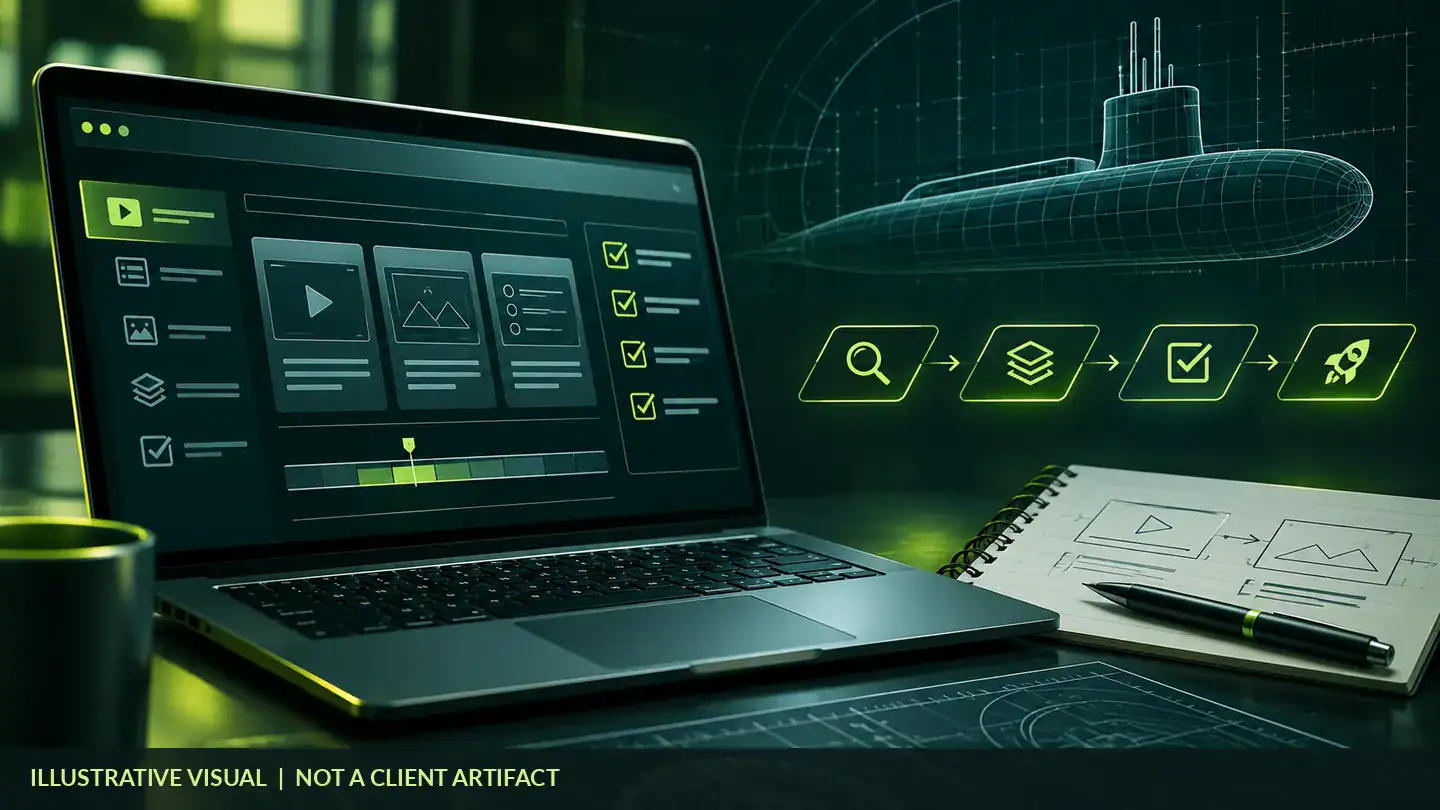
Result
The delivery date was met. The media tracker and pre-review meetings were adopted more broadly by colleagues. The work also received positive customer and manager feedback.
Lessons and design decisions
Technical accuracy came before polish. Early SME alignment, media tracking, and structured pre-review meetings reduced ambiguity and gave reviewers a clearer basis for feedback. The transferable practice is a repeatable, documented review system rather than any restricted source material.